Why You Keep Noticing the Hard Stuff: The Filter Your Brain Uses to Program Your Nervous System
You start thinking about buying a particular car, and suddenly it's everywhere. Every second driveway. Every roundabout. It was always there — you just didn't see it. Buy a red car, see a red car.
Or you're in a loud café, a dozen conversations blurring together, and someone across the room says your name. You hear it instantly.
That's not coincidence. That's your brain's filter at work.
What Is the Reticular Activating System?
Your brain takes in far more information than you could ever consciously notice. Something has to decide what gets through.
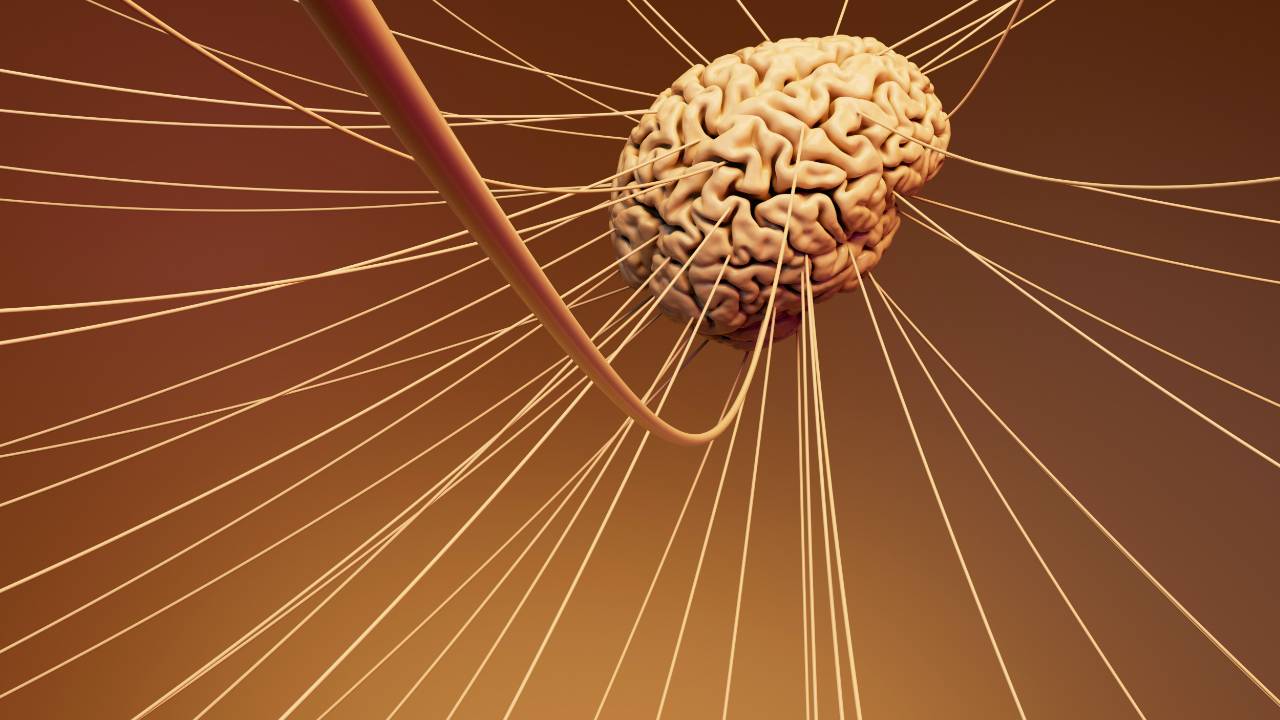
One of the systems involved is the reticular activating system (RAS) — a network of neurons in the brainstem that plays a part in arousal, wakefulness and attention. Put simply, it's part of the machinery that helps decide what reaches your awareness and what quietly fades into the background.
You'll see a lot of content online about "programming" your RAS — set the right goals, make the right vision board, and the right opportunities will start jumping out at you. There's a grain of truth in it: what you care about does shape what you notice.
But there's a piece that often gets left out. And for the givers, the carers, the ones who hold everyone else together — it's the piece that matters most.
Your Filter Isn't Only Set by Your Goals. It's Set by Your State.
When your nervous system feels safe and steady, your attention has room to move. You can take in the whole room. You notice the good bits, the options, the small openings.
When your system is braced — stretched thin, running on too little sleep, carrying too much for too long — attention narrows. Your body starts prioritising what might go wrong. The unanswered email. The tone in someone's voice. The thing you forgot.
That's not negativity, and it's not a mindset problem. It's a body doing exactly what it was designed to do: scan for threat first, because survival comes before everything else.
This is why you can write the clearest goals in the world and still find your attention pulled, again and again, toward what feels hard. The filter isn't broken. It's tuned to protect you.
You Can't Think Your Way to a Wider View
If your body is braced, telling yourself to "focus on the positive" rarely sticks. The instruction is coming from the thinking part of your brain, but the filter is being set lower down — in the body.
So the work isn't to override the filter. It's to give your nervous system enough stability that it can loosen its grip. When the body feels steadier, attention naturally widens.
Six Gentle Ways to Widen Your Filter
None of these are big overhauls. They're small signals of safety that add up over time.
1. Start with stability. Regular sleep and a steady daily rhythm do more for your attention than any focus hack. A body that knows roughly what's coming next doesn't have to stay on high alert.
2. Name what you want, simply. Clarity does help. Not a ten-step framework — just a plain sentence about what you'd like more of. "I want more ease in my mornings." Your attention needs somewhere to go.
3. Let your senses in. Slowly look around the room you're in. Let your eyes rest on three colours. Notice a sound, then a texture under your hand. This is called orienting, and it tells your body where it is — here, now, not in the worst-case scenario.
4. Rest your attention on one thing. A few minutes of letting your attention settle on a single point — your breath, your feet on the floor, a candle flame — trains the muscle of choosing where your attention goes. Start small. Five minutes is plenty.
5. Notice one good moment, in detail. Not a list of things you "should" be grateful for. One real moment, with texture: the warmth of the mug in your hands, the light on the kitchen wall, your child's laugh from the next room. Specific is what lands in the body.
6. Move in a way that suits your capacity. Movement helps a nervous system process what it's been holding. It doesn't need to be intense. A walk, a stretch, shaking out your arms. Match it to what your body has in it today.
Image credit: Photo by notorious v1ruS on Unsplash