How self-talk using your own name helps to fight off anxious feelings (just ask LeBron James)
'Aléna, here's exactly what you are going to do next' is not the way I'd typically phrase an affirmation.
But some research carried out.at the University of Michigan has suggested that intentional self talk can improve focus, confidence and performance-under-pressure.
Here's the low down. It would appear that using non-first-person pronouns and one’s own name (rather than first-person pronouns) during introspection enhances self-distancing.
Another word that is sometimes used for self-distancing is metacognition. This is a long established concept embedded into Buddhism, Taoism, and many other ancient philosophies that encourages one to observe their own thoughts without blindly identifying with or agreeing with them.
Non-first-person language use (compared with first-person language use) leads people to assess future stressors in more challenging and less threatening terms. This has been shown to physiologically effect our nervous systems. It changes the way the fight/flight/freeze or faun response is generated by affecting activity in the centre for warning signals and fear responses in the brain - the amygdala.
Serena Williams is known to have used this throughout her record-breaking career.
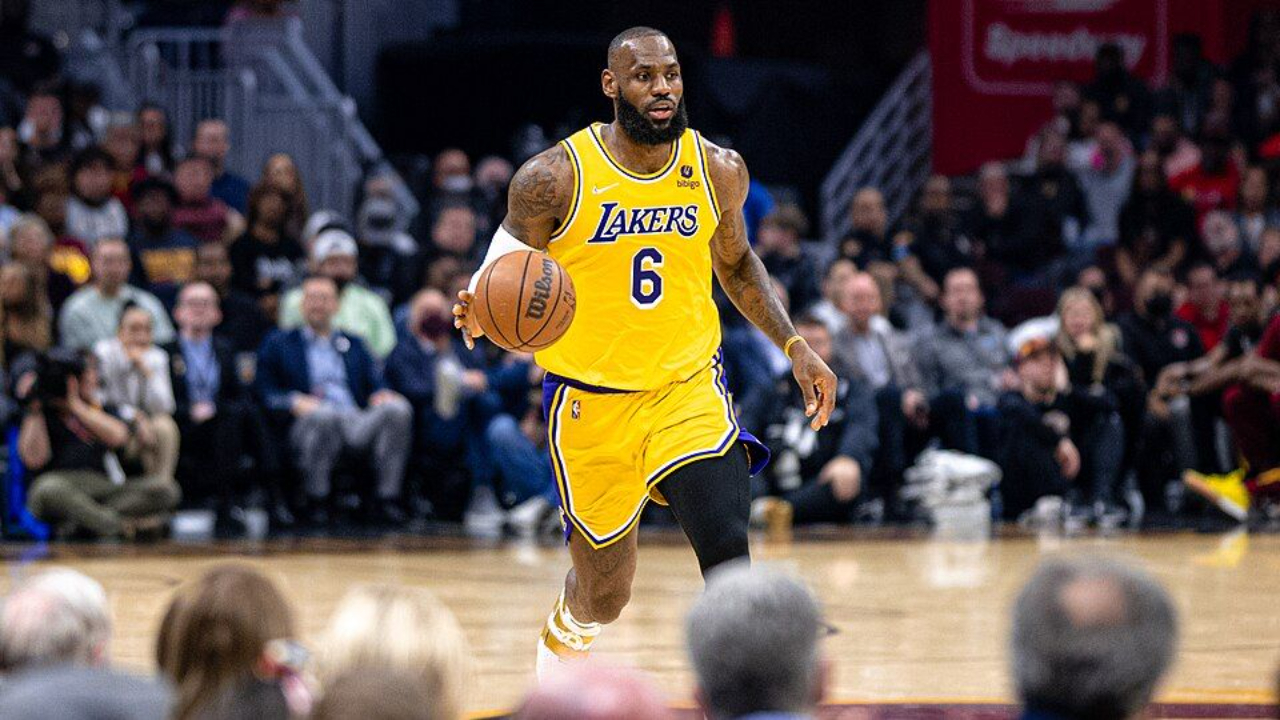
Another example: when LeBron James talked about deciding whether or not to stay with a smaller team or move to a bigger one, in an an interview he said..
"I wanted to do what’s best for LeBron James and to do what makes LeBron James happy” (Greenberg, 2010). Notice how James begins by referring to himself using the pronoun I, but then quickly switches to using his own name after indicating that he does not want to make an emotional decision. Does this shift from I to James represent a mere quirk of speech? Or could it represent something more—a process, for example, that consequentially influences people’s capacity to control their thoughts, feelings, and behavior?
It has been observed that referring to yourself by your own name produces much stronger activation in the prefrontal cortex. This creates a buffer between the 'experiencing' self and the 'evaluating' self.
As one post on socials put it, 'the conversation you have inside your own mind can have large implications on the results you create outside of it.'
As the amygdala responds to extreme pressure by activating a threat response, cortisol and adrenaline flood your system taking the prefrontal cortex and its clear thinking offline.
This is when people appear to 'choke' and grow overwhelmed.
Self talk has the potential to disrupt that pattern and interrupt the process at a neurological level by generating language that actually brings the prefrontal cortex back into the mix.
Under pressure we don't need motivation, or emotion, we need technical advice from the right source.
And our most trusted and authoritative source already exists within us.
That's why when we get stuck in patterns of negativity it can be so destructive because it reiterates the need over and over for the threat response to remain in play.
Internal language interacts with our physiological systems via the neural networks within us. Whether they instigate a threat response of calm it, is up to how we use it.
And how we use it is determined by the language we use. That's why athletes using structure third person self talk show better performance under pressure.
Not 'you've got this, Alena', but rather Alena here is exactly what you need to do' in precise and technical language.
Still not sure? Just ask LeBron, Serena or any number of highly successful athletes who used this exact thing to create massive success on the Court.